Follow Pink Pepper from Berry to CO₂ Extract
A supplier’s process description helps you read the material behind a spicy note.
Published 2026-11-05 · Fragrentis editorial team2 min read
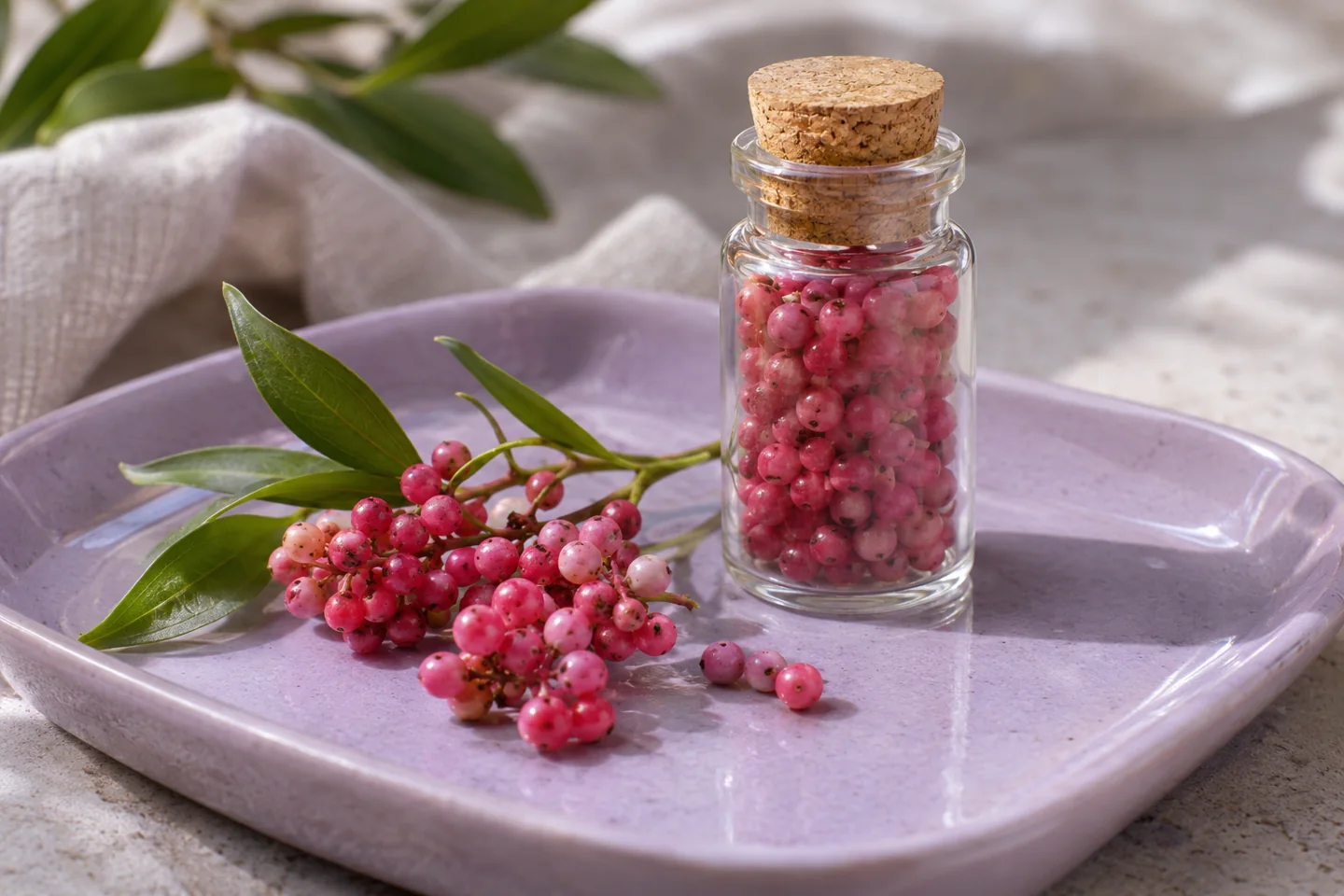
A list of perfume notes may use pink pepper to suggest an aromatic lift. A supplier’s material page answers a different question. It can identify the plant, the part processed and the method used to obtain a particular extract. Those details give you a more precise vocabulary when you encounter the same note in a finished fragrance.
Read the plant and process together
IFF LMR’s entry for Pink Pepper CO₂ identifies Schinus terebinthifolius and says the processed part is the berry. It describes a supercritical carbon dioxide extraction process. Here CO₂ identifies the extraction medium under particular processing conditions. The term belongs to the supplier’s method, so it is worth recording alongside the plant name rather than replacing the entire description with “pink pepper oil.”
The company describes the resulting material as spicy and aromatic, with a lively citrus impression and greener, resinous aspects. Its component list includes alpha-pinene and limonene. These are two entries in the supplier’s description of this extract. The component list gives you material information alongside the sensory description, without supplying a formula for a named consumer perfume.
Use the description to ask a narrower question
When a perfume mentions pink pepper, decide what you want to learn. If you want to explore a contrast between spicy brightness and a warmer wood, the note list may be sufficient to choose a few samples. If you want to know whether a particular extract was used, look for explicit material documentation from the maker.
Two descriptions can use the same word while referring to different levels of detail. “Pink pepper note” can communicate a sensory idea. “Schinus terebinthifolius berry, CO₂ extract” specifies a material and process in the supplier example. Keep both in your notebook, with the source beside each one. This makes it easier to compare a supplier’s technical description with a shop’s description of a finished product.
Give origin claims their own record
IFF discusses sourcing work in southeastern Madagascar for this material. Treat that as information about the supplier’s stated program and keep the supplier name attached. To make a claim about where another extract comes from, you would need documentation for that material too.
For your next comparison, try writing one sensory question in plain language, such as whether you prefer a bright spice impression alongside woods or flowers. The technical vocabulary helps you describe what you are looking for. A finished fragrance still deserves to be considered on its own description and, when possible, a sample.
Sources and illustration
- IFF LMR pink pepper CO₂ material entry. Standing supplier specification, processed material and components. Accessed November 4, 2026.
Illustration generated with AI; the bottles shown are generic.
A Fragrentis editorial publication. Editorial policy and disclosure.