Patchouli Heart Describes a Selected Fraction, Not a Universal Note
A supplier’s processing description can explain why two patchouli materials are not interchangeable labels.
Published 2026-10-28 · Fragrentis editorial team2 min read
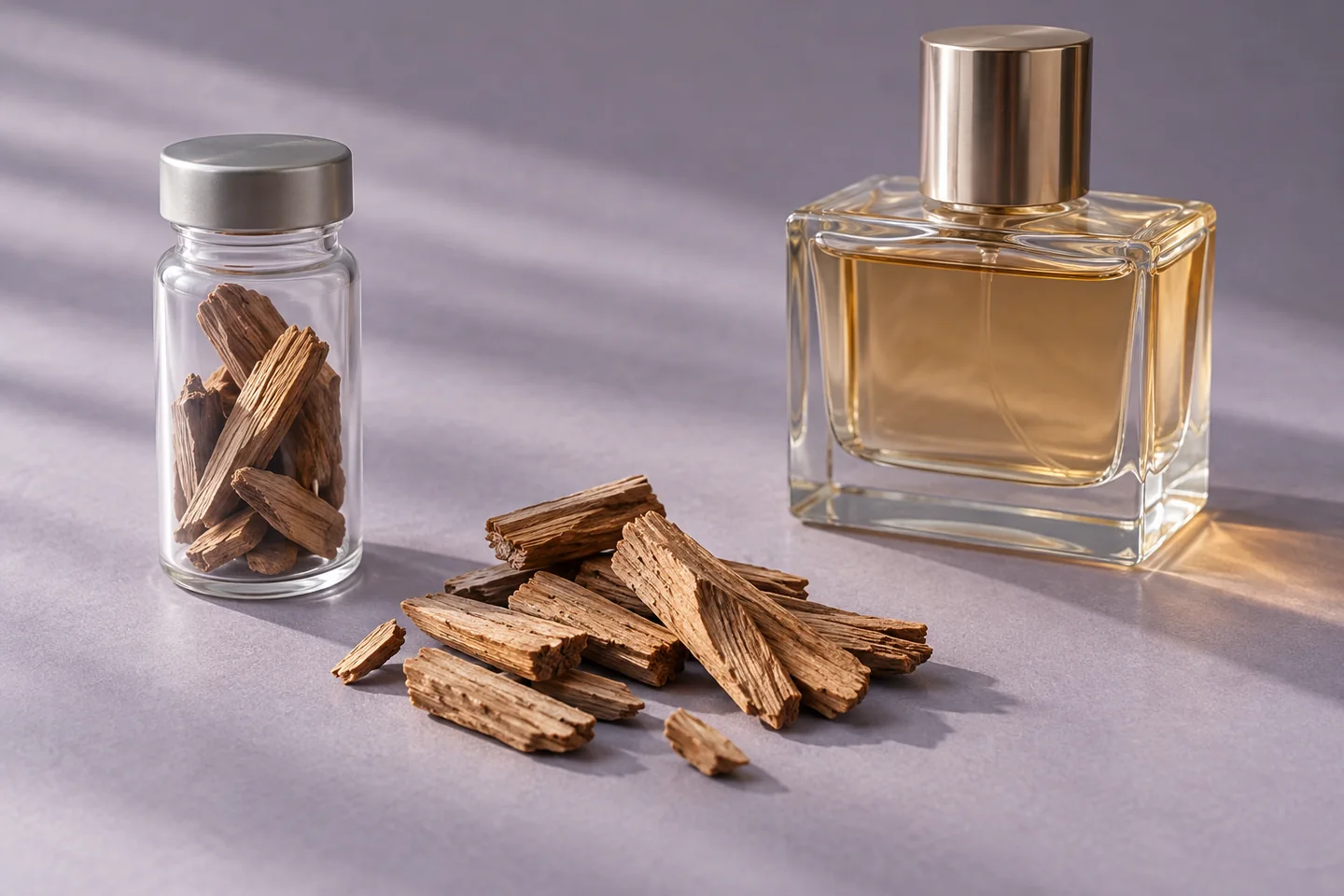
Two materials can begin with the same plant and still reach a perfumer through different processing choices. Patchouli Heart is a useful place to see that distinction. The word heart here belongs to a supplier’s material description; it is not a promise that every perfume with a patchouli note contains that exact ingredient.
Follow the documented processing
IFF’s LMR entry for Patchouli Heart N.3 identifies Pogostemon cablin and describes hydro distillation followed by fractional distillation to isolate a heart. Its component list includes patchouli alcohol among several named substances. This is a supplier description checked October 28, 2026, not a new scientific discovery or a full formula for a branded fragrance.
Fractionation separates portions of a mixture rather than making the plant name a guarantee of identical composition across products. It is a reason to ask which material is being discussed, not a reason to conclude that one version is automatically better or more natural than another.
Keep three meanings apart
A plant name identifies a botanical reference. A supplier product name identifies an offered material or grade. A perfume’s note description communicates an intended smell impression. These meanings can be related, but moving from one to the next requires evidence.
For instance, a retail description might say earthy patchouli without naming a supplier grade. You can use the description as a clue about the finished product while leaving the actual raw materials unknown. Adding a technical trade name from a glossary would make the claim more specific than the evidence allows.
Compare information of the same kind
If you are learning about materials, compare supplier entries for process, identity and attributed descriptions. If you are shopping for a finished perfume, compare the product’s own information and your practical reason for considering it. Do not use a raw-material property as a measured wear time for the finished mixture.
A short notebook entry can say: “Named botanical, selected supplier fraction, composition of this retail perfume undisclosed.” That keeps the learning useful without pretending you have reconstructed a recipe. Avoid extrapolating health, environmental or sourcing guarantees that the specific evidence does not establish.
There is room for future work on how processing choices affect well-defined materials, but a consumer note list cannot answer those research questions. For now, the professional habit is a modest one: preserve the distinction between a material you can identify and a smell you are being invited to explore. It makes a woody or earthy description more intelligible without turning it into a fictitious ingredient disclosure.
Source and editorial note
IFF LMR: Patchouli Heart N.3. Standing supplier entry, not a newly discovered ingredient. Checked October 28, 2026. Descriptions are attributed, not editor wear tests. The AI conceptual image is reused from our own original illustration archive; generic objects are not actual brand products, raw-material samples or experimental evidence.
A Fragrentis editorial publication. Editorial policy and disclosure.