Benzoin Can Have a Vanilla Facet Without Being Vanilla
Follow the material, extraction and description as separate clues when reading a balsamic fragrance note.
Published 2026-10-23 · Fragrentis editorial team3 min read
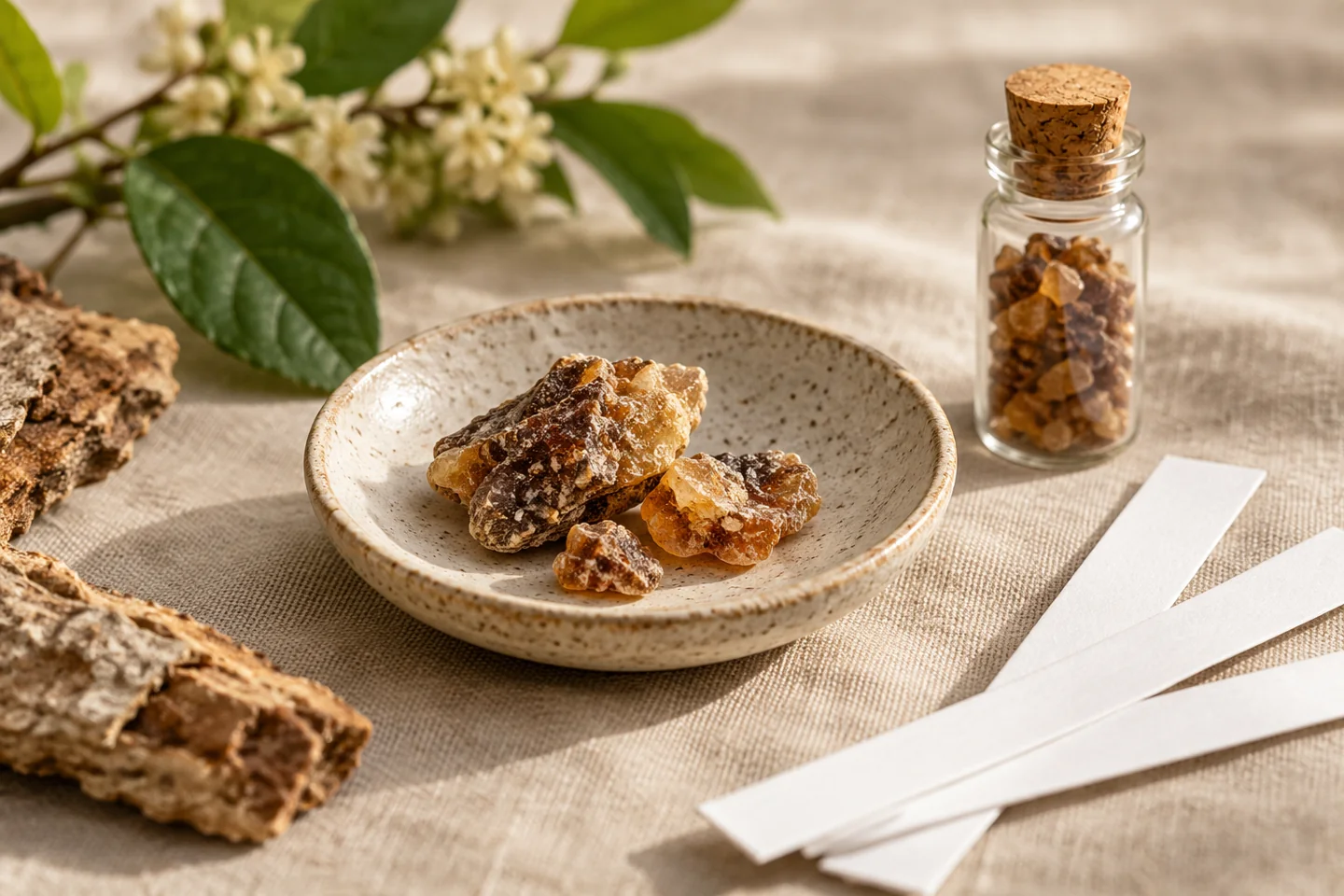
Two fragrance descriptions can both mention vanilla while pointing to different materials. Benzoin is one reason that the language of a scent and the identity of an ingredient should stay in separate columns.
A vanilla facet describes a resemblance in a smell profile. It does not, on its own, identify a vanilla plant extract or disclose a perfume's recipe. Reading the material name first makes the comparison more useful.
Start with the resin and its preparation
Firmenich's Benzoin Siam Res sheet identifies Styrax tonkinensis and the extracted part as gum. It describes a resinoid obtained through a primary volatile-solvent extraction, while a further purification step produces an absolute. The supplier characterizes its benzoin through warm, balsamic and vanilla aspects, with resinous and spicy detail. This is standing supplier information checked on October 23,2026, not a new scientific discovery or an analysis of a named retail perfume.
The process language matters. A resinoid and an absolute refer to preparations of a material; they are not simply poetic synonyms for sweetness. Keep the supplier, botanical identity and preparation attached to any technical statement rather than applying one product sheet to everything sold as benzoin.
Translate a facet without changing the identity
Imagine two descriptions on your shortlist. One explicitly names vanilla. The other describes a balsamic material with a vanilla facet. Both may interest someone who likes that direction, but the words do not establish an identical ingredient source.
A useful reading note would be: “Benzoin-related description; investigate the balsamic and resinous impression.” An unsupported note would be: “This must contain vanilla extract.” The second conclusion adds an ingredient that the description has not demonstrated.
The reverse shortcut is unhelpful too. Finding the word benzoin in a note list does not reveal how much is present, which preparation was used or which other materials create the effect. A brand's note pyramid is not a complete compositional disclosure.
Compare the question that interests you
If you are choosing a finished perfume, you do not need to reconstruct the formula to have a preference. Ask whether the described direction is one you want to explore, and consider the actual product if a suitable opportunity exists. Keep the product name attached to your impression rather than turning it into a claim about every benzoin material.
If you are reading technical ingredient information, ask a different set of questions: which supplier product, which botanical identity and which preparation? Do not infer those answers from the color of the liquid or a photograph of resin.
This guide is not a home extraction or formulation tutorial. A natural source does not establish personal suitability, and an ingredient description is not a safety assurance. The illustration is a generic explanation of the topic, not evidence of the raw materials used by our publisher.
The rewarding part of a note library is greater precision without unnecessary certainty. You can recognize a vanilla-like facet, understand why benzoin might be discussed beside it, and still leave the finished fragrance's undisclosed formula unknown.
Source and editorial notes
Firmenich: Benzoin Siam Res technical sheet. Standing supplier sheet; no new discovery date asserted. Accessed October 23,2026. Brand and supplier descriptions are attributed statements, not editorial wear tests. Illustration generated with AI; the bottles shown are generic. No Fragrantica text, ratings or images were used.
A Fragrentis editorial publication. Editorial policy and disclosure.