Tonka, Coumarin and an Almond Note Are Three Different Clues
A supplier’s material record helps separate the bean, the extracted material and the words used to describe a scent.
Published 2026-10-20 · Fragrentis editorial team2 min read
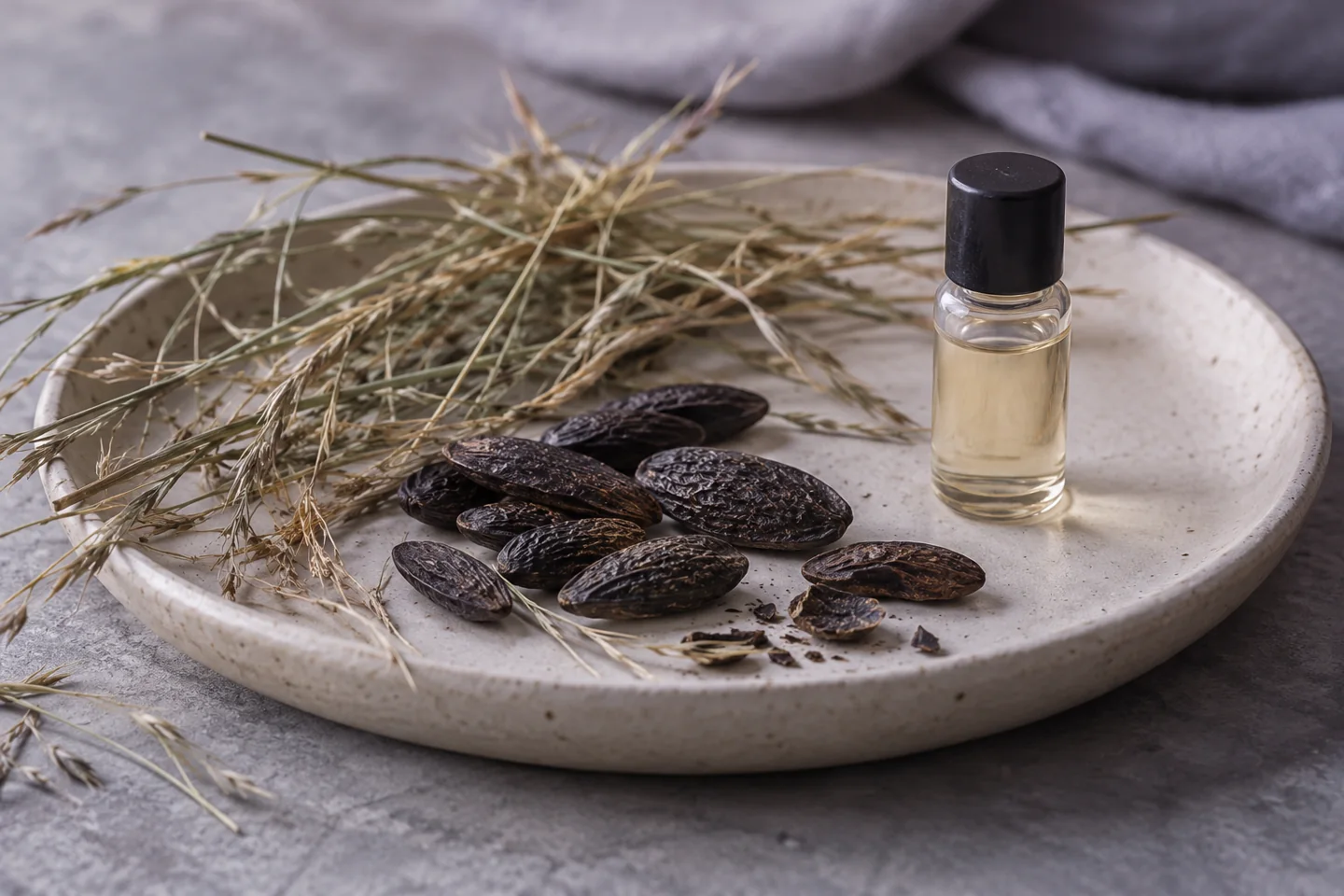
Tonka can sound like a single, easily pictured ingredient. Then a description adds hay, almond, powder or vanilla, and the picture becomes less straightforward. Those words can be useful without being a recipe.
Start with an actual material record
IFF’s LMR compendium identifies Tonka Bean Absolute with Dipteryx odorata and lists Brazil and Venezuela as origins. It describes solvent extraction followed by purification with ethyl alcohol. That is a supplier’s account of this material, not a home preparation method and not a description of every product using the word tonka.
The entry names coumarin among its components and describes warm, powdery, almond, hay and vanilla-like facets. These are the supplier’s material descriptions. The record does not disclose how much of the absolute, if any, appears in an unnamed finished fragrance.
Separate source, molecule and impression
The bean is the botanical source. The absolute is an extracted material. Coumarin is a named chemical component, while an almond or hay note describes an odor impression. Moving between those levels without saying so is where explanations become misleading.
An almond-like description is not proof that almond extract was used. Likewise, seeing coumarin in a finished product’s ingredient declaration does not by itself establish that tonka beans were the source. A description and a label answer different questions, and neither normally supplies the complete composition.
Think of the material entry as a vocabulary reference. It explains why a perfumer or brand might use several apparently unrelated words around tonka. It does not authorize us to reverse-engineer a bottle from those words.
Make the vocabulary useful in a comparison
Instead of asking whether all tonka fragrances smell alike, choose the facet that interests you. Do you want a dry hay association, a soft powdery effect, or a dessert-like direction? Those are questions to investigate in the finished scent, not outcomes guaranteed by the note name.
Keep the observation separate from the ingredient claim in your notes. “The brand mentions tonka” is one statement. “I am interested in a less sweet direction” is another. You can use both when choosing a sample without pretending to know the formula.
Leave extraction to the material producer
The professional process in a compendium is not a household recipe. Do not use this description to prepare an extract for skin or to add raw materials to a finished perfume. A supplier entry cannot establish the suitability of an improvised mixture.
Further clarity would come from product-specific ingredient information and defined evaluation of the finished fragrance. Until then, the most accurate reading is also the most practical: tonka suggests questions to ask, while the actual bottle supplies the experience you are choosing.
Sources and scope
- IFF LMR: Tonka Bean Absolute. Current supplier compendium; material description, not a finished perfume formula or independent trial. Accessed October 19, 2026.
A Fragrentis editorial publication. Editorial policy and disclosure.