Understanding Vanilla Notes in Perfume
Compare sweetness, texture and the role of a vanilla impression in the whole fragrance.
Published 2026-10-14 · Fragrentis editorial team2 min read
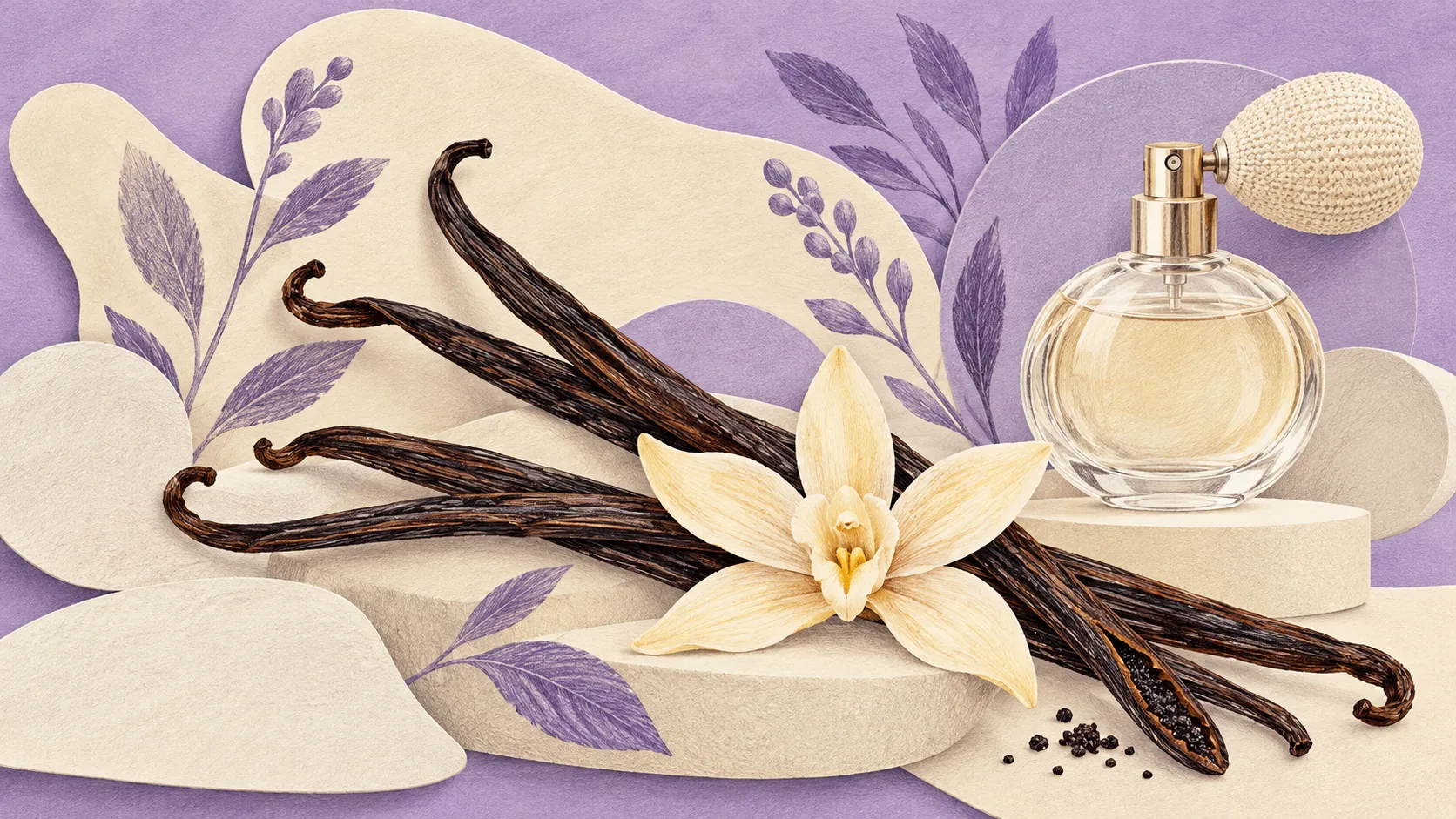
Two fragrances can both list vanilla and still invite different descriptions. One might remind you of something sweet and creamy; another might feel drier, woody or gently powdery. The word alone does not tell you how dominant that impression will be. Comparing the surrounding texture is often more helpful than asking whether you like vanilla in the abstract.
Separate sweetness from texture Make two independent scales on a note card: less sweet to more sweet, and dry to creamy. Do not assign numbers that imply a measured concentration. These are personal comparison tools. A sample can feel creamy without being your sweetest option, or sweet without feeling particularly soft.
Add a third question about the role of the impression: is vanilla the main idea, a background softness, or something you barely notice? Avoid assuming that prominence follows the order of words in a retail description. A named note is not a disclosure of the amount of an ingredient.
Compare with a clear contrast If you have access to two samples, pick ones described differently rather than two near-identical marketing stories. A vanilla-and-woods description and a vanilla-and-florals description offer a useful starting contrast. They do not guarantee what you will smell, so record your own observations before rereading the description.
Use a short imaginary comparison sheet: sample A feels rounded and sweet; sample B feels drier with a woody texture. Under each, write whether you would want that impression for an ordinary day or only occasionally. This is an editorial example, not a claim that a specific pairing always behaves that way. Your preference can depend on the complete fragrance and the setting.
Do not infer the formula from a familiar association A vanilla impression does not establish that a perfume contains vanilla extract or that it uses a particular natural or synthetic material. IFF's account of perfume creation distinguishes ingredients and the creative process; a retail scent description does not provide that complete formulation record. Product ingredient information and the maker's disclosures serve a different purpose from a note list.
After wearing a sample, finish with one sentence about what you liked or disliked. “The softness works for me, but the sweetness feels too central” is more actionable than “I don't like vanilla.” It helps you look for a different balance next time without excluding every perfume that uses the same descriptive word.
Sources and further reading
A Fragrentis editorial publication. Editorial policy and disclosure.