Iso E Super Is a Named Material, Not a Cedarwood Oil Label
Separate a supplier ingredient description from a woody impression in a finished perfume.
Published 2026-10-26 · Fragrentis editorial team2 min read
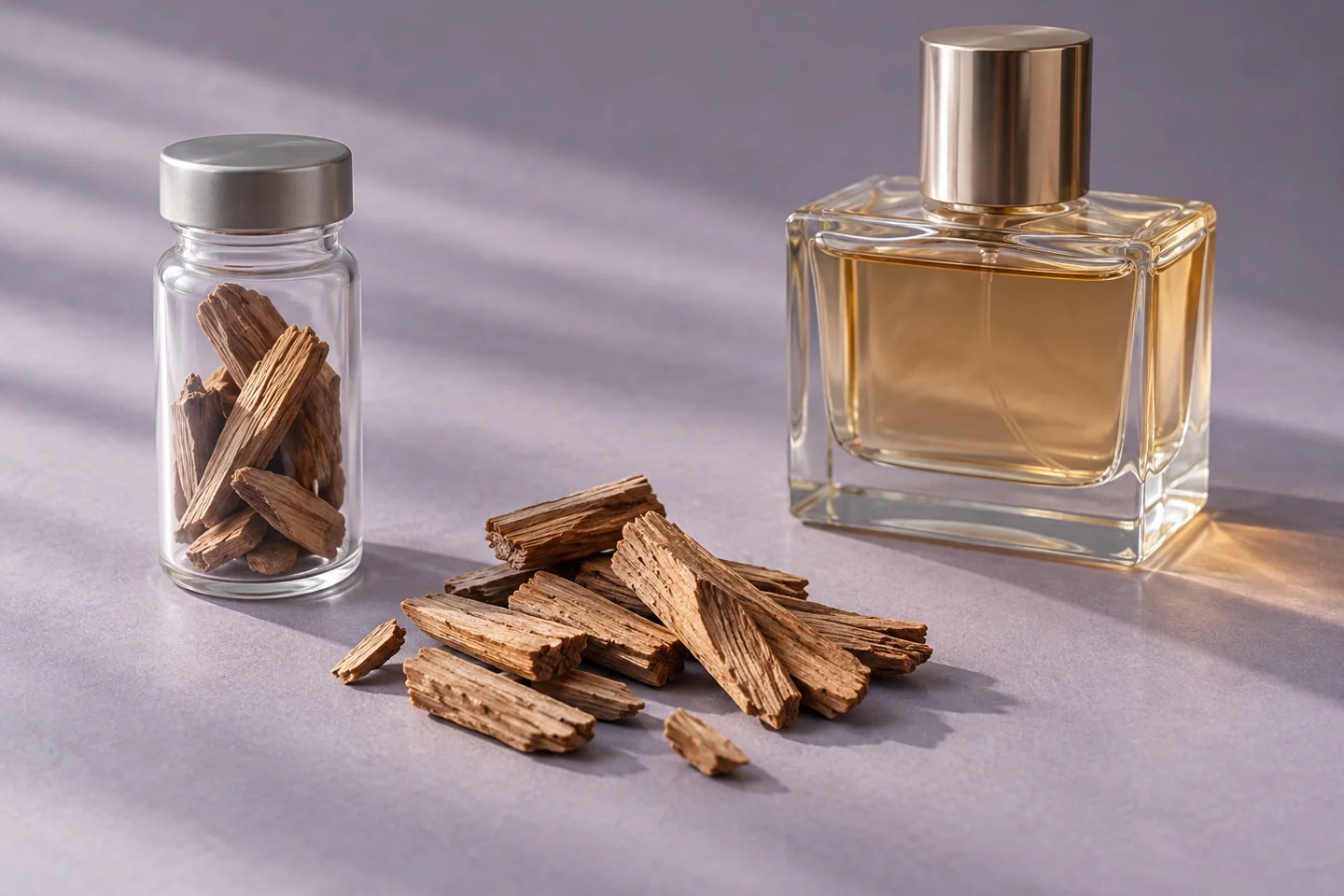
“Woody” can point to a material, an impression or a broad place on a perfume shelf. Confusion starts when those uses slide together. A name such as Iso E Super gives you a more specific ingredient reference, but it still does not reveal the recipe of a fragrance described as woody.
What the supplier actually describes
IFF’s ingredient compendium identifies Iso E Super by a chemical name and describes a smooth woody-amber character, with an effect on fullness and subtle strength. Those are supplier characterizations of a perfumery material, checked October 26, 2026. They are not measurements of a retail perfume’s longevity or a claim that its formula contains that material.
The distinction from a botanical oil is useful. A named chemical material and a cedarwood oil are different descriptions of what a supplier provides. An association with wood does not turn one into the other, establish natural origin or identify a tree species used in a finished product.
Read from specific to uncertain
Start with the evidence you actually have. A supplier page identifies its own product. A retail note list describes a finished scent’s intended impression. An ingredient label may name materials for a different purpose. Do not promote one kind of evidence into a complete formula simply because the vocabulary overlaps.
Suppose a seller describes an airy woody fragrance, and you have just read about Iso E Super. It may be tempting to announce that this is the explanation. Unless the maker has disclosed that connection, write “composition not established” instead. A useful comparison can still describe the seller’s words and the product you are considering.
Use the knowledge to ask a better question
If a material is central to a purchase claim, ask what exactly is being asserted. Is the claim about a disclosed ingredient, a sourcing certification, an aroma comparison or the finished product’s performance? Each requires its own evidence. A familiar material name should make the question clearer, not make the answer seem automatic.
There is no need to handle raw ingredients to use this distinction. Consumer sampling of a properly supplied finished product and laboratory evaluation of a material are different activities. This article is not dilution guidance or an assurance about skin suitability.
When keeping notes, try two columns: “documented material information” and “finished-fragrance questions.” Put IFF’s attributed description in the first. Put your unanswered questions about the actual perfume in the second. Keeping that small gap visible is a better foundation for learning than filling it with an imagined formula.
Source and editorial note
IFF: Iso E Super ingredient compendium. Standing supplier material description; no new discovery asserted. Checked October 26, 2026. Brand descriptions and supplier statements are attributed, not personal wear tests. The image is an original conceptual illustration, not a photograph of the discussed brand or a product supplied by the store.
A Fragrentis editorial publication. Editorial policy and disclosure.