Tuberose Absolute Is More Specific Than a White-Floral Note
Follow the flower-to-material record without treating a supplier compendium as a perfume recipe.
Published 2026-10-21 · Fragrentis editorial team2 min read
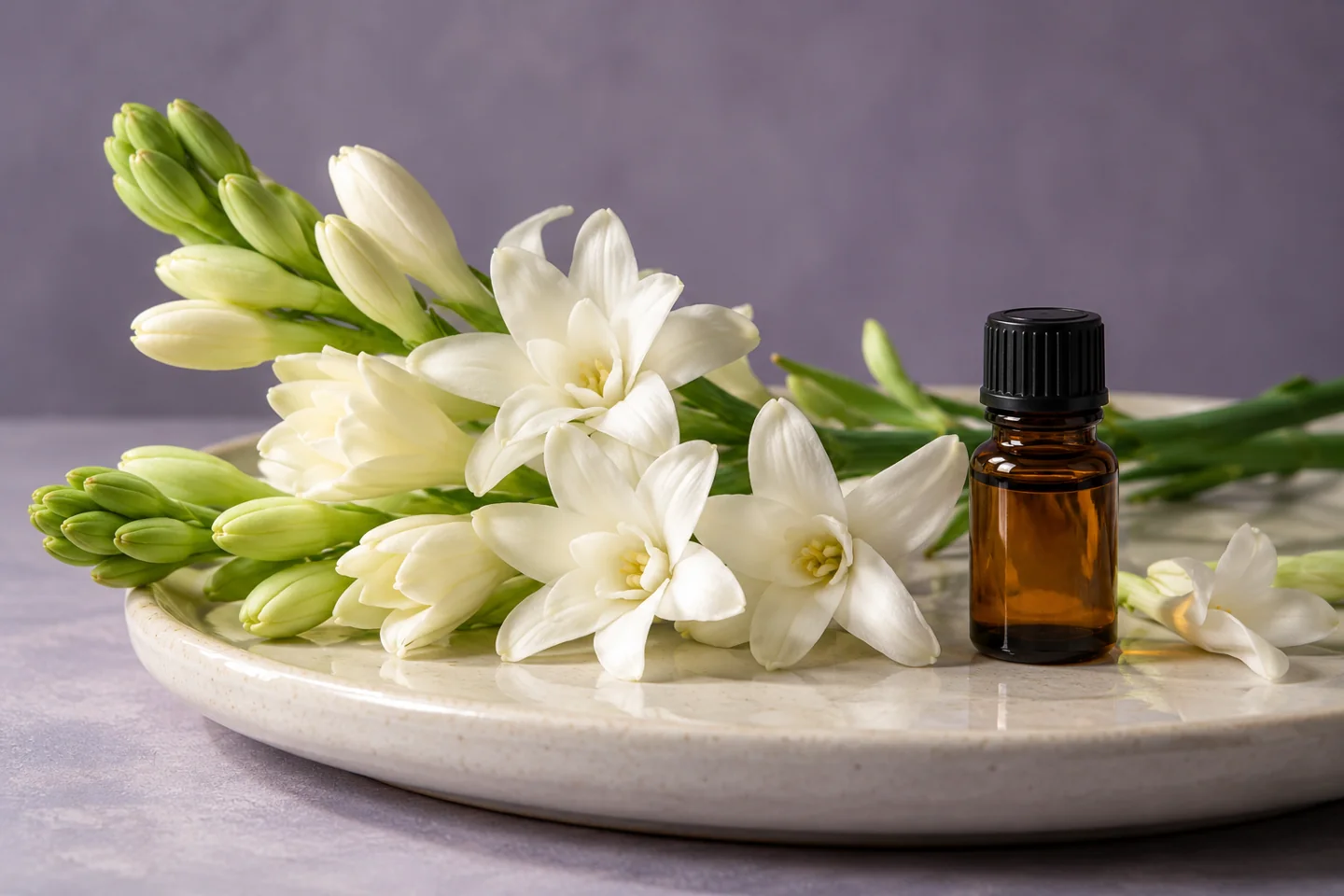
Tuberose appears in many white-floral descriptions, but the material name and the impression are not interchangeable. A supplier record gives a more precise starting point than a flower photograph.
Follow the material that is actually described
IFF’s LMR record for Tuberose ABS India Traceable identifies Polianthes tuberosa L., names India as the origin and specifies flowers as the processed part. It describes solvent extraction followed by purification with ethyl alcohol. The record also explains that a concrete is transformed into an absolute in Grasse.
These details describe a professional fragrance material and its production route. They are not household extraction instructions. The word absolute refers to that material type; it is not a general quality ranking for finished perfumes.
A component list is still not a finished formula
The supplier lists components including methyl benzoate, benzyl benzoate and jasmine lactone. That is more specific than calling a perfume white floral, but it still does not reveal the proportions or materials in a consumer bottle that mentions tuberose.
Nor does sharing one component name make two different natural materials identical. A useful explanation keeps track of which material the record describes and which claims remain unknown about the finished fragrance.
Read the facets without turning them into ingredients
The LMR entry describes spicy and green facets with a coconut-toned effect. These are the supplier’s odor descriptions, checked on October 21, 2026. A coconut-like impression does not establish that coconut was added to the material, just as a white-floral description is not a list of flower extracts.
For a comparison note, choose one facet that interests you. Perhaps you want to investigate a greener floral direction rather than a sweeter one. That is a useful sampling question. It is not evidence that a brand used this exact absolute or that every tuberose composition will answer the question the same way.
Keep the botanical story at the right scale
The supplier’s sourcing record belongs to its specified material. Do not transfer its traceability or certification claims to an unrelated retail perfume without product-specific evidence. A note name alone cannot make that connection.
Likewise, no material entry can guarantee that a finished fragrance is suitable for every person or use. Follow the actual product information and leave raw-material handling to appropriate professional processes.
The rewarding part of reading a compendium is precision: flower, extraction type, components and described facets become separate clues. You can use those clues to ask better questions without pretending that a familiar note has disclosed a secret recipe.
Sources and scope
- IFF LMR: Tuberose ABS India Traceable. Current supplier material record; source, extraction and components are not a finished perfume formula. Accessed October 21, 2026.
A Fragrentis editorial publication. Editorial policy and disclosure.