Follow Vetiver from Root to Material Description
The plant part and extraction method tell a more useful story than a woody label alone.
Published 2026-10-30 · Fragrentis editorial team2 min read
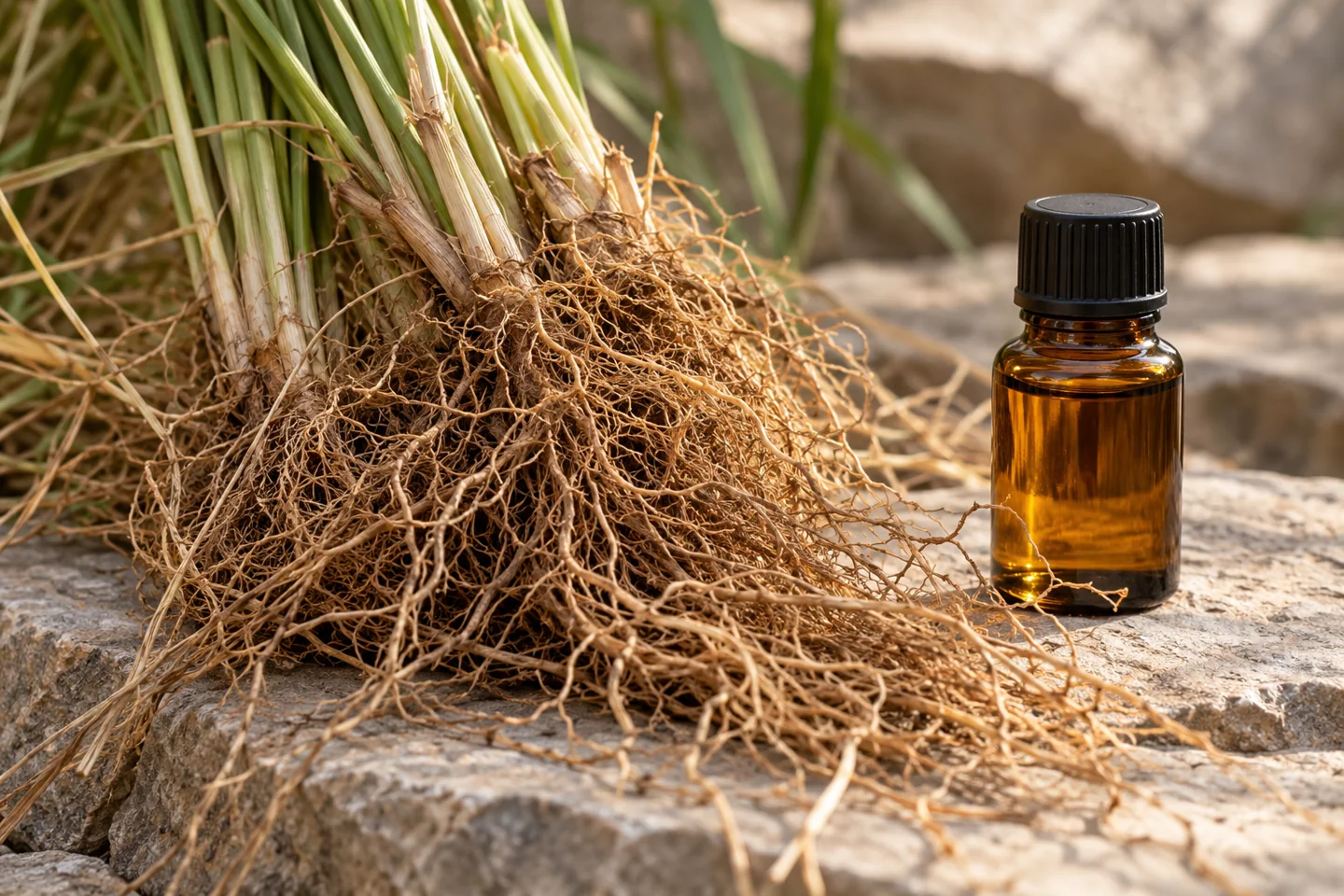
Vetiver often appears in a list of woody notes. That can leave an easy misconception: that the material must come from a piece of wood. In the supplier example examined here, the processed plant part is the root. Starting there makes the vocabulary more concrete.
What the supplier identifies
IFF LMR’s Vetiver Oil Haiti entry identifies roots as the processed part and hydrodistillation as the extraction process. It classifies the material as an essential oil and describes a woody-earthy character with grapefruit and nutty facets. These are the supplier’s descriptions of this particular material, not our direct evaluation.
Hydrodistillation uses water in the distillation process. The finished oil is a material produced from the plant; it is not simply a miniature root in liquid form. An extraction description tells you how a raw material is obtained, without telling you the complete composition of a retail fragrance.
Several components, one material name
The entry lists components including khusimol and alpha- and beta-vetivone. That illustrates why a natural essential oil should not be treated as one single molecule. This article does not assign percentages, infer which component dominates a finished perfume or turn the list into a home blending recipe.
Keep the source attached to the statement. Haiti is the origin given for this supplier entry. It does not establish the origin of every vetiver material on the market, much less prove the sourcing of a perfume that names vetiver in its marketing.
Use the information when reading a fragrance
Separate three records: the plant, the extracted raw material and the finished scent description. A note list on a shop page belongs to the third record unless the producer supplies more specific ingredient information. The same word can be useful at each level without meaning the same amount of disclosure.
For example, “woody-earthy” gives you vocabulary to explore, while “root-derived oil” answers a sourcing question. Neither tells you whether the finished perfume will feel dry, soft, smoky or bright to you. Other materials and the overall composition remain part of that experience.
A better next step is a narrower question for the seller: is this a descriptive note, or is a specific natural material and origin actually disclosed? An honest “not disclosed” is more informative than an invented plantation story. Appreciate the botanical background without assigning undocumented ingredients, sustainability credentials or health benefits to a bottle.
Source and editorial note
IFF LMR: Vetiver Oil Haiti. Standing supplier technical description, accessed October 30, 2026. This is editorial guidance, not a personal wear test. Illustration generated with AI; the bottles shown are generic. The image does not document brand merchandise, a laboratory result or an actual supplier transaction.
A Fragrentis editorial publication. Editorial policy and disclosure.