Linalool Is a Material Name, Not Proof of a Lavender Bouquet
Follow one familiar label word from aroma material to finished fragrance without guessing the formula.
Published 2026-10-16 · Fragrentis editorial team3 min read
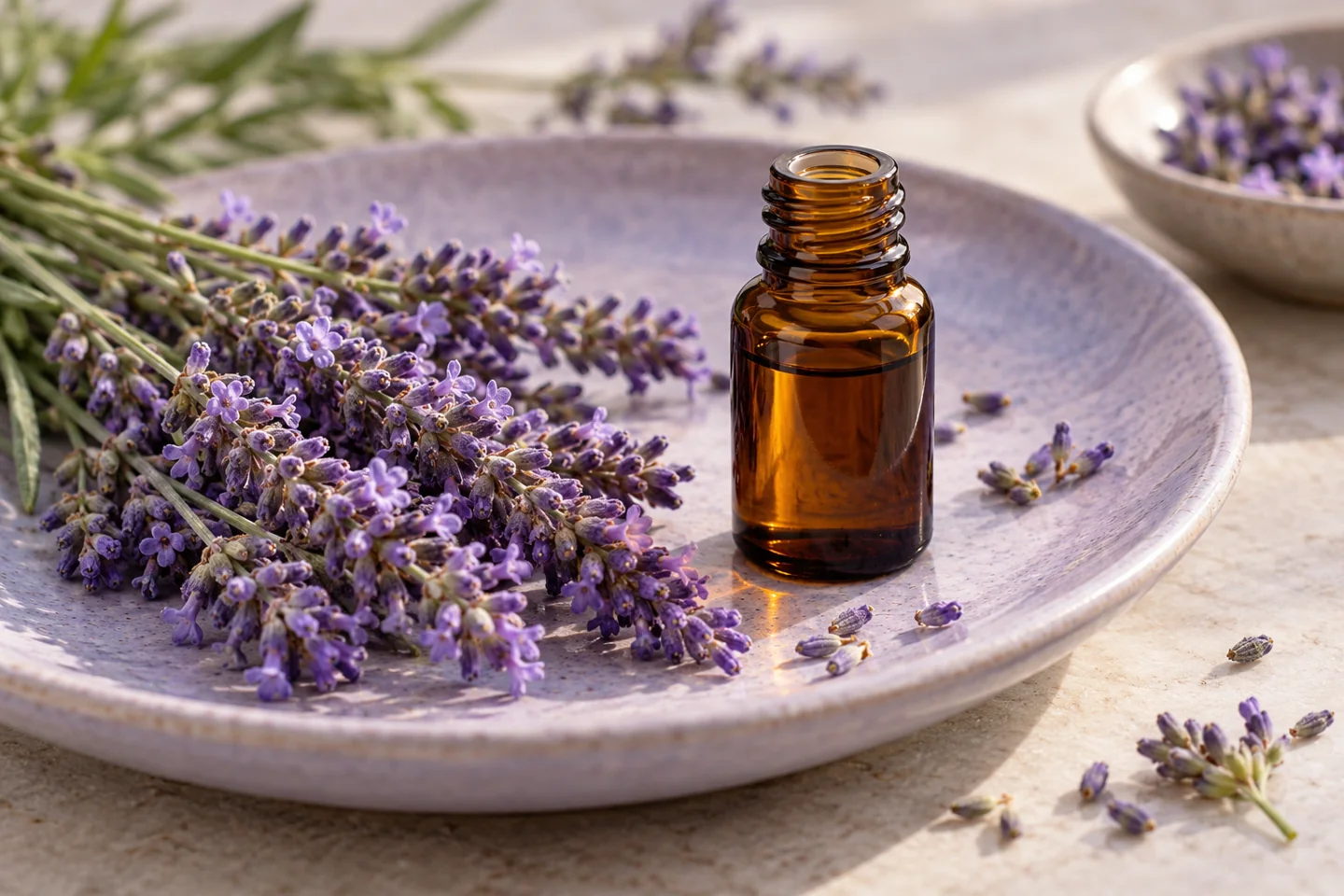
Linalool often catches the eye because it looks close to a botanical name. It identifies an aroma chemical, not a declaration that the whole perfume smells of lavender or contains a particular quantity of lavender oil.
A small piece with several possible roles
BASF describes linalool through fresh floral, herbal and lavender associations and lists it among materials used in lavender, citrus and other compositions. Its technical sheet gives the formula C10H18O. The presence of that material therefore need not announce a single dominant note. A composition can use a familiar building block in a less obvious setting.
Supplier odor descriptions are useful vocabulary, but they describe a material under the supplier’s conditions. They are not an independent assessment of a finished bottle in a shop. Nor does a technical sheet’s use guidance reveal a brand’s chosen percentage.
Source and smell are separate questions
Linalool can be obtained through synthetic production as well as occur in botanical materials. Its name alone does not disclose the route used in a particular perfume. A supplier’s manufacturing route cannot be assigned to an unrelated brand simply because both use the same ingredient name.
That distinction matters when reading claims about naturalness. Ask whether the statement concerns a named ingredient, a particular supplied material or the entire finished product. These are different claims with different evidence requirements. A flower photograph answers none of them on its own.
Lavender is not one isolated word
BASF’s portfolio also includes linalyl acetate and other materials with different descriptive profiles. Comparing those entries is a useful introduction to how a perfumer can build an accord from multiple components. It is not a do-it-yourself formula, and a brand’s lavender note list does not tell us which combination was used.
For a reading exercise, put three headings on a page: ingredient name, advertised note, and unknown. Linalool belongs under ingredient when it is printed on the label. Lavender belongs under advertised note when the brand uses that description. Source, concentration and the full accord stay under unknown unless separately documented.
What this changes when you choose
If you dislike one lavender perfume, do not assume you dislike every product listing linalool. The complete mixture is the relevant object of comparison. Conversely, a favored lavender description does not establish ingredient suitability.
FDA guidance explains that fragrance can represent a mixture on a cosmetic label. Read the package and seek product-specific information for an ingredient concern. This discussion explains vocabulary and material roles; it does not provide allergy advice, a safety guarantee or evidence of any seller’s secret formula.
Sources and scope
- BASF: Lavender ingredient portfolio. Current supplier descriptions, not independent finished-perfume testing. Accessed October 16, 2026.
- BASF: Linalool technical information. Technical sheet dated March 31, 2022; deliberately identified as older material reference. Accessed October 16, 2026.
- FDA: Fragrances in Cosmetics. Standing US consumer guidance; no launch or study date asserted. Accessed October 16, 2026.
- BASF: Fragrance makers. February 22, 2020; background on synthetic aroma materials, not current news. Accessed October 16, 2026.
A Fragrentis editorial publication. Editorial policy and disclosure.